A balcony already feels different once spring arrives, but how much that shift actually shows depends on far more than simply setting out a few new plants. Adding color is only the starting point — what separates a balcony that feels intentionally styled for the season from one that feels like leftover winter furniture with a plant added on top is how greenery, textiles, lighting, and layout are all coordinated to work together rather than existing as a series of disconnected purchases.
Getting that coordination right depends on a few factors: how the planting scheme relates to the balcony’s actual light exposure, how furniture is scaled to fit a typically small footprint, and how well textiles and lighting extend the space’s use into cooler spring evenings. A balcony crowded with mismatched pots reads very differently than the same balcony finished with a considered color palette and proportional furniture, even though both technically qualify as “spring decor.” Here are fifteen approaches worth knowing, along with what makes each one distinct.
It’s also worth thinking of greenery, furniture, and finishing touches as three separate design decisions that need to work in conversation with each other, rather than one automatically following from the other. The same set of spring flowers can look completely different depending on whether they’re paired with a matching set of low seating and warm-toned textiles, or scattered among mismatched furniture left over from other seasons, and choosing all three together — rather than buying plants first and addressing seating and styling as an afterthought — tends to produce a far more cohesive, inviting result.
1. Layered Potted Plants at Varying Heights

Grouping potted plants in a range of heights — tall grasses or small trees at the back, mid-height flowering plants in the middle, trailing varieties at the front — creates a layered, garden-like effect without requiring the floor space a single sprawling planting bed would need. This approach works especially well on balconies where floor room is limited but vertical space along a railing or wall is available.
Because balconies often get more direct sun and wind than ground-level gardens, choosing plant varieties suited to those specific conditions matters more here than it would for an indoor arrangement. Rotating in seasonal flowering plants, like tulips or daffodils early in spring followed by longer-blooming annuals later on, keeps the layered display looking fresh as the season progresses.
2. Pastel Color Palette Across Cushions and Accessories

Introducing spring through a coordinated pastel palette — soft pink, pale yellow, sage green — across cushions, throws, and small accessories gives a balcony an immediate seasonal update without requiring any new furniture or major investment. This approach is one of the lowest-effort ways to shift a balcony’s mood from winter to spring.
This combination works particularly well when the underlying furniture stays neutral, since a busy furniture pattern combined with a busy pastel palette on top of it tends to compete rather than complement. Swapping just the cushion covers and a throw blanket each season, rather than replacing entire cushions, keeps this approach both affordable and easy to repeat year after year.
3. A Small Bistro Set as the Central Feature

A compact two-chair bistro table, sized appropriately for the balcony’s actual dimensions, gives even a small space a clear function — morning coffee, a quick meal outdoors — while leaving enough room to move around it comfortably. Choosing the right scale is more important here than on a larger patio, since an oversized table can make a small balcony feel unusable rather than furnished.
Folding or stackable bistro sets offer added flexibility on very tight balconies, since they can be tucked away when not in use to free up floor space entirely. Adding a small tablecloth or runner in a spring-appropriate color, along with a single low vase of fresh flowers, keeps the table feeling styled even when it’s not set for a full meal.
4. Vertical Herb Garden Near the Kitchen-Facing Wall

A wall-mounted or tiered herb planter — basil, mint, parsley, chives — gives a balcony a practical spring project alongside its decorative one, since fresh herbs planted in early spring are typically ready to use within a few weeks. This approach works particularly well on balconies close to or visible from the kitchen, reinforcing the connection between the space and everyday use.
This setup depends on adequate sunlight, since most common herbs need several hours of direct light daily to grow well, so checking the balcony’s actual sun exposure before choosing which herbs to plant helps avoid disappointing results. Harvesting regularly, rather than letting herbs grow unchecked, keeps the planter looking tidy and encourages fuller, bushier growth over the season.
5. String Lights or Lanterns for Extended Evening Use

Adding warm string lights along a railing or overhead, or a few small lanterns placed among the plants, extends how late into spring evenings the balcony stays comfortable to use, since early spring evenings can still turn cool and dim well before a typical dinner hour ends.
This approach works best when the lighting is layered rather than relying on a single overhead source — string lights for ambient glow, a small lantern or two at seating height for closer light. Choosing warm-toned rather than cool-toned bulbs keeps the overall feel consistent with the soft, seasonal atmosphere the rest of the balcony’s styling is working toward.
6. A Single Statement Planter as the Focal Point

Rather than many small pots scattered across the balcony, choosing one larger, well-proportioned planter with a striking plant — a small ornamental tree, a full hydrangea, an architectural grass — gives the space an obvious focal point and reduces the visual clutter that comes from managing many smaller containers.
The rest of the balcony’s greenery and decor should stay simpler in comparison, meaning even the seating and accessories are chosen to avoid competing with the statement planter for attention. Repositioning the planter occasionally as the plant grows or as sun patterns shift through the season keeps it looking intentional rather than fixed in a spot chosen once and never revisited.
7. Woven Natural Textures Throughout

Incorporating woven natural materials — a rattan chair, a jute rug, a wicker side table — brings warmth and texture to a balcony without relying on strong color, which suits balconies where the surrounding building material or view is already fairly neutral and doesn’t need competing patterns added on top.
Because natural woven materials can be more sensitive to moisture than synthetic alternatives, checking whether pieces are rated for outdoor use, or bringing them in during heavy spring rain, helps them hold up through the season. Pairing woven textures with a small amount of soft textile — a single cushion or throw — keeps the look from feeling too rigid or purely functional.
8. Railing Planter Boxes for Maximum Greenery in Minimal Space

Mounting planter boxes directly along the balcony railing puts greenery at eye level and frees up the entire floor for furniture or movement, which makes this one of the more space-efficient ways to add substantial planting to a small balcony without sacrificing usable floor area.
This approach depends on securing planter boxes properly to the railing, since wind exposure on upper-floor balconies can be significant enough to dislodge improperly attached containers. Choosing trailing or cascading plant varieties for railing boxes, rather than upright ones, creates a fuller visual effect as the plants grow and spill over the edge through the season.
9. A Cozy Reading Nook With a Single Comfortable Chair

Dedicating one corner of the balcony to a single comfortable chair, a small side table, and a soft throw creates a personal retreat suited to reading or relaxing outdoors, rather than treating the balcony purely as a dining or entertaining space. This approach suits smaller balconies where a full seating set wouldn’t leave enough room to move.
Choosing a chair with a weather-resistant frame and a removable, washable cushion cover makes this nook practical to maintain through spring’s more unpredictable weather. Positioning the chair to face the balcony’s best view or its most established planting area, rather than back toward the building, gets the most out of the limited space available.
10. Coordinated Outdoor Rug and Furniture in a Single Tone Family
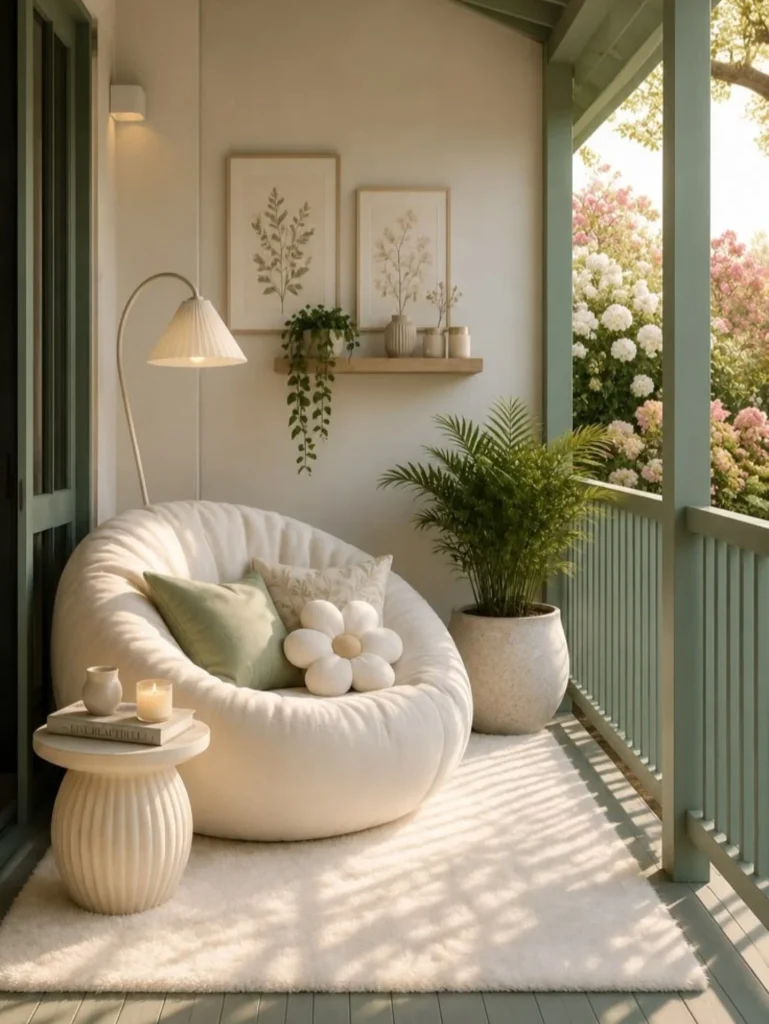
Choosing an outdoor rug and furniture pieces within a single tone family — various shades of terracotta, or a range of soft blues, for instance — establishes a cohesive base for the rest of the balcony’s spring styling, similar to how a consistent material palette anchors an indoor room.
This approach pairs especially well with a simpler planting scheme layered on top, since a busy plant selection combined with a busy furniture and rug combination underneath tends to feel visually crowded on a small footprint. Choosing an outdoor-rated rug specifically, rather than an indoor rug moved outside temporarily, helps it withstand direct sun and occasional rain without fading or warping.
11. A Small Water Feature or Fountain

A compact tabletop or freestanding water feature introduces gentle sound and movement to the balcony, which can make even a small urban space feel noticeably calmer, particularly for balconies facing busy streets where the sound helps soften surrounding noise.
This approach requires access to a nearby outlet for most fountain styles, so checking power access before purchasing helps avoid an awkward cord run across the balcony floor. Cleaning the water feature every few weeks during regular spring use prevents algae buildup and keeps the water clear and the sound consistent.
12. Fresh-Cut Flowers in a Weatherproof Vase

Keeping a single weatherproof vase of fresh-cut seasonal flowers on the balcony’s table or ledge adds rotating color throughout spring without the longer-term commitment of planting, and it’s easily refreshed as different flowers come into season.
This approach works well as a smaller addition to almost any other balcony style on this list, rather than as the sole decorative element, since a single vase adds a touch of color without requiring the balcony to be restyled around it. Choosing sturdy, heavier stems for outdoor placement, rather than delicate varieties, helps the arrangement hold up better against wind than it would indoors.
13. A Hanging Egg Chair or Swing for a Playful Focal Point

A hanging chair or small swing, suspended from a ceiling hook or a freestanding frame, gives the balcony a distinctive focal point while also providing genuinely comfortable seating, and its shape tends to stand out more than a standard chair would in photos and in person alike.
This approach requires confirming the ceiling or frame can support the weight of both the chair and its occupant, so checking manufacturer weight limits and mounting requirements matters more here than with typical balcony furniture. Adding a soft cushion and a small blanket to the hanging chair keeps it inviting rather than purely decorative.
14. Pollinator-Friendly Plantings for a Living Balcony

Choosing spring plants known to attract bees and butterflies — lavender, salvia, alyssum — turns the balcony into a small but genuine pollinator habitat, which appeals to households wanting their outdoor space to serve a purpose beyond decoration alone, particularly in denser urban areas with limited ground-level greenery nearby.
This approach benefits from grouping several pollinator-friendly varieties together rather than scattering single plants throughout, since a concentrated cluster of blooms is generally more effective at attracting pollinators than the same plants spread thinly. Avoiding pesticide use on these plantings specifically helps preserve the ecological value the approach is meant to provide.
15. Seasonal Rotation Plan Between Spring and Other Seasons

Rather than treating spring decor as a one-time setup, planning from the start for how furniture, planters, and textiles will rotate into summer, then fall and winter, keeps the balcony from requiring a full redesign every few months and instead allows a smaller set of seasonal swaps to carry the space through the year.
This approach benefits from choosing a core set of neutral, weather-resistant furniture that stays in place year-round, with only planters, cushions, and small accessories changing by season. Storing off-season items in a dedicated bin or closet, rather than letting them accumulate on the balcony itself, keeps each season’s version of the space feeling intentional rather than layered on top of the last.
Choosing and Maintaining a Cohesive Spring Balcony
With fifteen distinct approaches to consider, a few practical principles help identify which combination will actually suit a specific balcony, climate, and lifestyle.
Balcony size and sun exposure should guide which approaches matter most. A small, shaded balcony benefits disproportionately from vertical planting and a single well-chosen chair, while a larger, sunnier balcony gets more value from a full bistro set and a broader planting scheme. Trying to apply every approach equally to every balcony often produces a more crowded result than identifying which two or three ideas suit the specific space’s actual dimensions and light.
Climate affects how forgiving certain choices are over time. Woven natural materials and delicate hanging chairs hold up better in drier, more sheltered climates, while balconies exposed to frequent spring rain or strong wind may find weather-resistant furniture and securely mounted planters easier to maintain without ongoing repairs or losses. Checking a plant’s actual light and water needs against the balcony’s real conditions, rather than its appeal in a photo, tends to prevent the most common early-spring disappointments.
Maintenance capacity deserves real consideration before committing to a particular planting or styling scheme, since some approaches — a vertical herb garden, a water feature, layered potted plants — require more regular attention than a single statement planter or a simple pastel textile refresh. Choosing an approach that realistically matches the time available for watering, harvesting, and upkeep keeps the balcony looking intentional through the season rather than gradually neglected.
Finally, styling a balcony for spring is generally more sustainable when treated as part of an ongoing seasonal rhythm rather than a single one-time refresh. Starting with a durable furniture base, layering in plants and textiles suited to the space’s actual conditions, and planning ahead for how the look will shift into later seasons allows the underlying principles — proportion, coordinated color, and purposeful greenery — to carry the balcony through the year rather than requiring a full overhaul each time the weather changes.
Being specific about how much sun the balcony actually gets, how much time is realistic for ongoing plant care, and which one or two colors and materials will anchor the space’s look helps translate a general goal like “spring balcony decor” into the precise combination of choices described above. Because small differences in plant selection, furniture scale, and layering produce such different overall results, that extra bit of specificity at the planning stage is often what separates a balcony that feels genuinely refreshed for spring from one that simply has a few new plants on it.