Finding the perfect hairstyle for women over 70 with fine hair is all about creating softness, movement, and the appearance of natural volume. As hair changes with age, it may become finer, thinner, or more delicate. The right haircut can make styling easier, bring attention to your favorite facial features, and help you feel confident without spending hours in front of the mirror.
Fine hair is not a limitation. It can look elegant in a short pixie, sophisticated in a classic bob, or soft and feminine in a layered crop. The secret is choosing a hairstyle that works with your natural hair texture instead of fighting against it. Strategic layers, a flattering fringe, a carefully shaped neckline, and lightweight styling products can all help fine hair look fuller.
Women over 70 also have many options when it comes to length. A short haircut may be convenient if you prefer a quick morning routine, while a chin-length bob can offer more styling flexibility. Even longer hair can look beautiful when it is healthy, carefully shaped, and easy to manage.
Before choosing a new hairstyle, consider your hair density, scalp condition, face shape, lifestyle, and the amount of maintenance you enjoy. Fine hair does not always mean thinning hair: some women have many fine strands, while others have lower overall density. These differences affect which cuts will create the best result.
In this guide, we explore 15 beautiful hairstyles for women over 70 with fine hair in 2026. You will find classic cuts, modern options, easy styling tips, maintenance advice, and answers to common questions about making fine hair look fuller and healthier.
Classic Short Pixie Cut

The classic short pixie is one of the most practical hairstyles for women over 70 with fine hair. It keeps the hair relatively short around the sides and back, with slightly more length on top to create shape and movement.
One advantage of a pixie is that it removes excess length that may pull fine strands downward. When the cut is shaped correctly, the hair can appear lifted rather than flat. The shorter length can also make washing, drying, and everyday styling easier.
A classic pixie does not have to look severe. Soft edges around the ears, a gently textured crown, and a little length around the front can create a feminine and flattering finish. You can also keep the top smooth for an elegant appearance or add a little texture for a more modern look.
How to style it:
- Apply a small amount of lightweight volumizing mousse to damp hair.
- Blow-dry the roots gently, lifting them with your fingers.
- Use a small brush to direct the front sections into place.
- Add a tiny amount of flexible styling cream if needed.
- Finish with a light-hold spray rather than a heavy product.
Avoid using too much wax or oil, as these can separate fine strands and make the hair look thinner.
Best for: Women who want a simple, polished haircut that is easy to manage every day.
Soft Layered Bob

A soft layered bob is a timeless choice for women over 70 who prefer a little more length than a pixie. It usually sits around the chin or jawline and features subtle layers that create movement without removing too much fullness.
Fine hair can sometimes look flat when it is cut into a heavy, shapeless style. Carefully placed layers may help the hair move more naturally and prevent the ends from appearing overly bulky. However, too many layers can make fine hair look sparse, so balance is important.
A softly layered bob can be worn with a center part, a side part, or a gentle fringe. A side part may create the appearance of extra lift at the roots, while a center part gives the haircut a balanced, contemporary feel.
Styling tips:
- Start with clean, damp hair.
- Apply a lightweight volumizing product.
- Blow-dry with a round brush, lifting the roots gently.
- Turn the ends slightly inward if you want a classic finish.
- Use a light mist of hairspray to hold the shape.
This haircut works particularly well when the outline remains full and the layers are subtle. Bring a reference photo to your stylist and explain that your priority is movement without sacrificing density at the ends.
Best for: Women who want a classic, versatile haircut with a soft and graceful shape.
Chin-Length Bob With Side-Swept Bangs

A chin-length bob with side-swept bangs creates a flattering frame around the face while keeping the hairstyle manageable. The bob provides structure, and the angled fringe adds movement across the forehead.
Side-swept bangs can be especially useful if you prefer a softer alternative to a full, straight fringe. They blend naturally into the rest of the haircut and can be styled to one side for a polished appearance.
For fine hair, the fringe should not be excessively thick because taking too much hair from the front can reduce fullness elsewhere. A light, carefully shaped fringe is often enough to create the desired effect.
How to style it:
- Apply a lightweight heat protectant if using a blow-dryer.
- Dry the fringe in the direction you want it to fall.
- Use a small round brush to create a gentle curve.
- Shape the bob with a larger brush for a smooth finish.
- Add a small amount of flexible-hold spray.
You can wear the bob sleek for formal occasions or add a soft bend at the ends for everyday wear. The side-swept fringe also offers some flexibility when your natural parting changes.
Best for: Women who want a classic bob with a soft, face-framing detail.
Short Textured Crop

A short textured crop is a modern haircut that creates movement through small variations in length. Rather than having every section lie flat, the hair is shaped to create gentle separation and a little natural-looking lift.
This style can be especially helpful for women with fine hair that tends to fall close to the scalp. A stylist can add texture in selected areas while preserving enough fullness around the perimeter.
The textured crop is flexible enough to look polished or casual. You can smooth it into place for a more formal appearance or use your fingers to create a slightly tousled finish.
Styling tips:
- Apply a small amount of lightweight mousse to damp hair.
- Blow-dry while lifting the roots with your fingertips.
- Direct the crown in the direction that creates the most natural volume.
- Use a tiny amount of styling paste on the ends if needed.
- Avoid overworking the hair after it has been styled.
The goal is not to make the hair look messy. Instead, the subtle texture creates dimension without requiring a complicated routine.
Ask your stylist to avoid excessive thinning or aggressive texturizing if your hair is already sparse. Fine hair often benefits from careful shaping rather than removing large amounts of bulk.
Best for: Women who prefer a contemporary, easy-to-style haircut with a little extra movement.
Short Feathered Hairstyle

A short feathered hairstyle uses softly tapered sections to create light movement around the crown, sides, and face. The ends are shaped so that the hair flows rather than forming a solid, heavy outline.
This style has remained popular because it can look elegant without appearing overly structured. It works well for women who want a traditional short haircut with a softer, more flowing finish.
For fine hair, feathering needs to be done carefully. If too much hair is removed from the ends, the hairstyle may look wispy rather than full. A skilled stylist can create movement while maintaining a balanced silhouette.
How to style it:
- Apply lightweight volumizing mousse to damp hair.
- Use a round brush to lift the crown.
- Direct the front sections away from the face if desired.
- Shape the sides gently with a brush.
- Finish with a flexible spray.
The feathered look is particularly attractive when the hair has a little lift at the crown and soft movement around the face. You do not need to curl every section individually to achieve the effect.
Best for: Women who like soft, traditional hairstyles with gentle movement and a polished finish.
Short Bob With Wispy Bangs

A short bob with wispy bangs offers a soft, delicate look that works well for women who want a fringe without making it the main feature of the haircut.
Wispy bangs are lighter and more separated than a thick, blunt fringe. They can create a gentle frame around the forehead while allowing the natural hairline to remain visible.
This detail can be adapted to a chin-length bob or a slightly shorter cut. The bob’s outline helps maintain the appearance of fullness, while the fringe adds movement around the face.
Styling tips:
- Apply a small amount of lightweight styling product to damp hair.
- Dry the bangs gently with a small brush.
- Keep the fringe light rather than forcing it into a thick shape.
- Blow-dry the rest of the bob for a smooth or slightly curved finish.
- Use minimal hairspray to avoid stiffness.
Wispy bangs can be easier to grow out than a very short, blunt fringe. However, they may need occasional trims to maintain the desired length.
If your hair is especially fine at the front, discuss the amount of hair needed for the fringe before cutting. Preserving density around the temples may be more important than having a thick fringe.
Best for: Women who want a gentle, feminine hairstyle with a light fringe.
Short Wavy Bob

A short wavy bob is an excellent option for women over 70 who have natural waves or enjoy creating soft bends in their hair. The length typically falls around the chin or just below it, allowing the waves to create movement without becoming difficult to manage.
Waves can make fine hair appear more dimensional because they introduce changes in direction and light reflection. However, heavy products can weigh down delicate strands, so the styling routine should remain lightweight.
This haircut can look polished with smooth waves or relaxed with a slightly tousled texture. It also works with a side part, which can help create the appearance of extra height at the roots.
How to style it:
- Apply a lightweight mousse or wave-enhancing product.
- Scrunch the hair gently while damp if it has natural waves.
- Use a diffuser on low heat or allow the hair to air-dry.
- If necessary, create a few loose bends with a curling iron and heat protectant.
- Separate the waves gently with your fingers.
Avoid creating very tight curls if your goal is a soft, natural look. A few loose waves can be enough to add movement and body.
Best for: Women who want a relaxed, feminine haircut that works with natural waves.
Tapered Short Hairstyle

A tapered short hairstyle features gradually shorter hair around the sides and neckline, with a little more length toward the top. This creates a clean outline while allowing the crown to retain shape.
The tapered cut can be tailored to suit different preferences. A subtle taper creates a soft, traditional look, while a more defined version feels modern and structured.
For women with fine hair, the top should be shaped carefully so that it does not appear too thin. A little additional length can provide more styling flexibility, while the tapered sides keep the overall haircut neat.
Styling tips:
- Use a lightweight volumizing product on damp hair.
- Dry the crown while gently lifting the roots.
- Smooth the sides with your fingers or a small brush.
- Direct the front sections forward or to one side.
- Finish with a small amount of flexible-hold spray.
One benefit of this haircut is that it can look tidy without extensive styling. However, the neckline may need regular trimming to maintain the shape.
Best for: Women who want a neat, structured short haircut with a little volume on top.
Classic Short Shag

A classic short shag features layers throughout the hair, creating movement and a relaxed silhouette. It often includes shorter sections around the crown and softer pieces around the face.
Although shag haircuts are frequently associated with thick hair, they can also work for fine hair when the layering is subtle and carefully planned. The aim is to create movement without removing too much density.
A short shag can be worn with a side fringe, curtain bangs, or no bangs at all. It is particularly attractive if your hair has natural waves because the layers allow the texture to show.
How to style it:
- Apply a lightweight mousse to damp hair.
- Use your fingers to lift the roots while drying.
- Encourage natural waves with gentle scrunching.
- Arrange the front layers around the face.
- Finish with a light styling spray.
The shag should look soft rather than overly choppy. If your hair is very fine, ask your stylist to preserve enough length around the perimeter so that the ends still look full.
Best for: Women who want a relaxed haircut with texture and a modern appearance.
Side-Parted Short Bob

A side-parted short bob is a simple but effective choice for women who want a classic hairstyle with a little added lift. Moving the part away from the center changes how the hair sits at the roots and can create the appearance of more volume on one side.
The bob itself can be blunt, softly layered, or slightly angled toward the front. For fine hair, a relatively full outline can help the ends look thicker.
This haircut is also versatile. It can be worn smooth for formal occasions or given a gentle curve for a softer everyday finish.
Styling tips:
- Create your side part while the hair is damp.
- Apply a lightweight volumizing product near the roots.
- Blow-dry the roots in the opposite direction briefly before arranging the part.
- Use a round brush to shape the ends.
- Finish with a light-hold spray.
If your hair naturally falls in a particular direction, work with that pattern rather than forcing a part that feels uncomfortable. A small adjustment may be enough to refresh your look.
Best for: Women who want a timeless, easy-to-manage bob with a little extra root lift.
Short Pixie With Side-Swept Fringe

A pixie with a side-swept fringe combines the convenience of short hair with a softer detail at the front. The sides and back remain relatively short, while the fringe is left longer so it can sweep gently across the forehead.
This style can be especially flattering if you prefer a short haircut but do not want all your hair directed away from your face. The longer front section creates movement and gives you several styling options.
Fine hair may benefit from a lightweight finish that preserves natural movement. Heavy creams and oils can make the fringe separate into thin strands, so use only a small amount of product.
How to style it:
- Apply a little volumizing mousse to damp hair.
- Blow-dry the fringe in the direction you want it to fall.
- Lift the crown gently with your fingers.
- Use a small amount of styling cream to arrange the ends.
- Finish with flexible-hold spray.
You can wear the fringe smooth for a refined look or add subtle texture for a more relaxed style. Regular trims will help preserve the shape, particularly around the ears and neckline.
Best for: Women who like short hair but want a soft, face-framing fringe.
Chin-Length Bob With Soft Layers
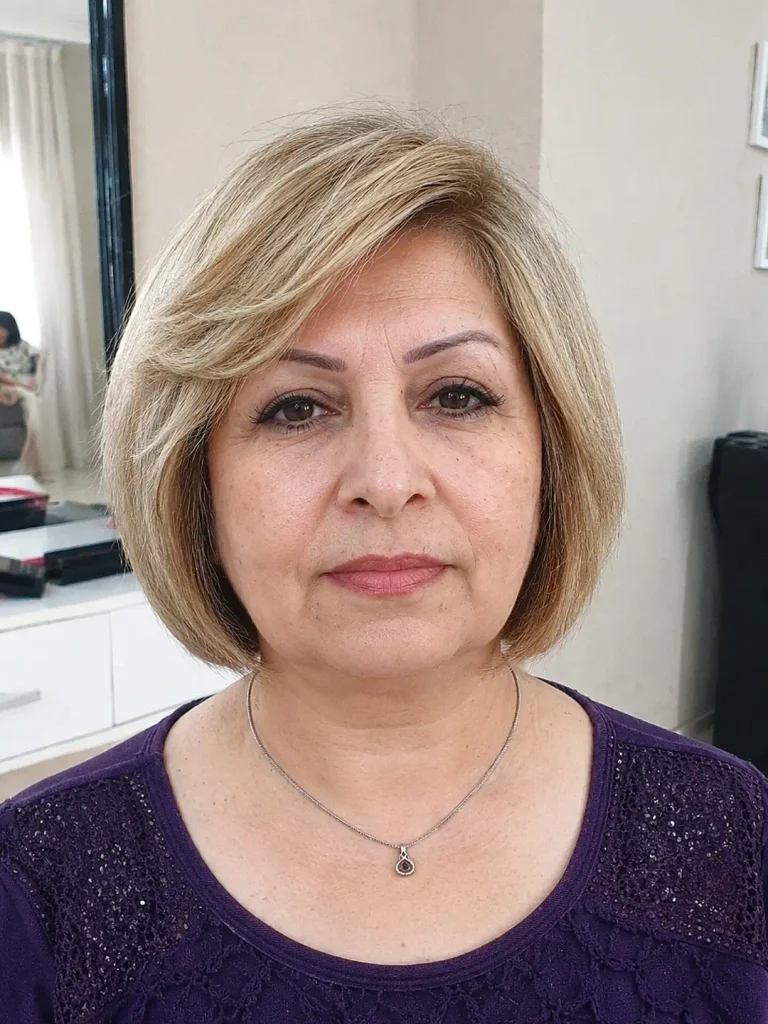
A chin-length bob with soft layers is a good middle ground between a structured classic bob and a heavily layered haircut. It maintains enough length to frame the jawline while adding movement through subtle shaping.
For fine hair, the key is preserving fullness. Layers should be placed where they help the haircut move naturally without leaving the ends looking thin.
This style works with straight hair and gentle waves. It can also be customized with a side part, a light fringe, or longer face-framing sections.
Styling tips:
- Apply a lightweight blow-dry product.
- Use a round brush to create gentle lift at the roots.
- Turn the ends slightly inward or leave them straight.
- Avoid excessive heat or repeated straightening.
- Finish with a light mist of hairspray if needed.
A chin-length bob can be particularly useful if you want a hairstyle that looks polished but still offers some flexibility. It is long enough to tuck behind the ears and short enough to avoid the weight of much longer hair.
Best for: Women who want a classic haircut that balances fullness, movement, and versatility.
Short Curly Crop

A short curly crop is a lovely choice for women who have natural curls and want a haircut that celebrates their texture. It can be shaped close to the head or left slightly fuller at the crown, depending on the density and curl pattern.
Curly hair can create the appearance of extra volume, but fine individual strands still need gentle handling. A cut that follows the natural curl pattern may help the hair look balanced without requiring a great deal of styling.
The best shape depends on how much your curls shrink when dry. Ask your stylist to account for this before choosing the final length.
How to style it:
- Apply a suitable leave-in conditioner to damp hair.
- Use a small amount of curl cream or lightweight gel.
- Scrunch gently to encourage the curl pattern.
- Air-dry or diffuse on low heat.
- Avoid brushing the finished curls if you want to preserve definition.
To refresh your hairstyle between washes, mist flattened sections lightly with water and reshape them with your fingers. Use additional product only where needed.
Best for: Women who want a short, natural hairstyle that works with their curls rather than against them.
Short Angled Bob

A short angled bob is slightly shorter at the back and longer toward the front. This shape creates a subtle diagonal line that can make a traditional bob feel more modern.
For women over 70 with fine hair, the angled shape may provide structure and help the hairstyle look intentional without requiring many layers. The back can be softly graduated, while the front remains long enough to frame the face.
The angle should be customized to your hair density and preferred styling routine. A dramatic angle can look bold, while a gentle angle offers a more understated result.
Styling tips:
- Apply a lightweight heat protectant before blow-drying.
- Use a round brush to shape the back and sides.
- Smooth the longer front sections gently.
- Keep the ends neat to emphasize the haircut’s outline.
- Use a light finishing product rather than heavy oil.
This style is especially attractive when the outline is clean and the ends look healthy. It can be worn with a side part for additional softness.
Best for: Women who want a polished bob with a contemporary shape and minimal layering.
Soft Silver Pixie

A soft silver pixie embraces natural gray or silver hair while keeping the haircut short, light, and elegant. Rather than covering every gray strand, this style allows the natural color to become part of the overall look.
Silver hair can vary from bright white to smoky gray, and its appearance depends on natural pigmentation, lighting, and hair condition. A well-shaped pixie helps the texture and color stand out without needing an elaborate styling routine.
The cut can be smooth and refined or softly textured around the crown. If your natural hair is already silver, you may not need additional color at all. If you prefer a cooler silver tone, consult a professional about whether a toning service is suitable for your hair.
How to style it:
- Use a lightweight shampoo and conditioner suited to your scalp and hair.
- Apply a small amount of volumizing product if needed.
- Lift the roots while blow-drying gently.
- Arrange the front sections with your fingers.
- Finish with a light styling spray.
Some silver hair develops a yellowish cast due to environmental factors, products, or heat exposure. A purple shampoo may help neutralize unwanted yellow tones in some cases, but it should be used according to the product instructions and not so frequently that the hair becomes dry.
Best for: Women who want to celebrate their natural silver hair with a short, timeless haircut.
How to Make Fine Hair Look Fuller After 70
The right haircut is only one part of creating a fuller-looking hairstyle. Small changes to your styling routine can help fine hair look more lifted and manageable.
Choose the Right Length
Fine hair can look beautiful at several lengths, but very long hair may appear flatter if the weight pulls the roots downward. Short pixies, crops, and bobs often make it easier to create lift.
That does not mean you must cut your hair short. If you enjoy longer hair, ask your stylist to create a shape that preserves fullness around the ends.
Use Lightweight Styling Products
Heavy creams, oils, and waxes can make fine strands look flat or greasy. Try lightweight mousse or a volumizing spray, applying a small amount at first.
Products designed to add body may help create lift, but results vary depending on the hair’s texture and density. If your hair becomes stiff or coated, reduce the amount you use.
Change Your Parting
A slight change in your part can make the roots sit differently. A side part or a gently shifted part may create the appearance of more height.
Avoid forcing the hair into a direction that causes discomfort or exposes areas you would rather keep covered. The aim is to work with your natural growth pattern.
Blow-Dry With Care
A blow-dryer can help create volume when used gently. Lift small sections at the roots with your fingers or a round brush and direct the airflow toward the roots.
Use a moderate heat setting and avoid holding the dryer too close to the scalp. If you use heat regularly, consider a suitable heat protectant.
Avoid Excessive Thinning
Fine hair does not always need more layers or thinning. Removing too much hair can leave the ends looking sparse, especially if the hair is already low in density.
Tell your stylist that you want to preserve fullness. A well-shaped perimeter and subtle layers may create a better result than aggressive texturizing.
Hair Care Tips for Women Over 70 With Fine Hair
Fine hair can be more vulnerable to tangling and breakage, especially when it is dry or chemically treated. A gentle routine helps keep it manageable.
Use a Gentle Washing Routine
Choose a shampoo that suits your scalp. If your scalp becomes oily quickly, you may need to wash more frequently; if it is dry, you may prefer a gentler formula.
Apply conditioner mainly where the hair needs it. Fine hair may become weighed down by rich formulas, so adjust the amount according to how your hair responds.
Detangle Carefully
Use a wide-tooth comb or a soft brush and work gently through knots. Start at the ends and move upward rather than pulling from the roots.
Avoid rough towel-drying. Gently blot the hair with a soft towel or cotton T-shirt to reduce unnecessary friction.
Protect Hair From Heat and Chemical Damage
Frequent heat styling, bleaching, and chemical processing may weaken hair and increase breakage. Use heat protectant when styling and discuss the condition of your hair before any major chemical service.
If your hair is becoming noticeably thinner or shedding more than usual, a healthcare professional or dermatologist can help assess possible causes. Hair changes can have several explanations, and a haircut alone may not address them.
Keep Your Haircut in Shape
Short hair often looks best when the outline is maintained. Pixies and tapered cuts may need more frequent trims than longer bobs.
Ask your stylist to recommend a schedule that suits your haircut, growth rate, and budget. Between appointments, avoid attempting major reshaping at home unless you have the experience to do so safely.
Frequently Asked Questions
1. What is the best hairstyle for women over 70 with fine hair?
A classic pixie, soft layered bob, or short textured crop can be excellent choices. The best haircut depends on your hair density, natural texture, face shape, and preferred maintenance routine.
2. Should women over 70 with fine hair keep their hair short?
Not necessarily. Short hair can be easier to manage and may create the appearance of more volume, but medium-length and longer hairstyles can also look beautiful. Choose the length that suits your preferences and hair condition.
3. Do layers make fine hair look thicker?
Subtle layers can create movement and help the hair sit more naturally. However, too many layers may make fine ends appear sparse. A stylist should tailor the amount of layering to your hair density.
4. What is the easiest haircut to maintain?
A short pixie or textured crop may be quick to style at home. However, very short cuts often require regular trims to maintain their shape. A bob may offer a good balance between styling convenience and flexibility.
5. How can I add volume to fine hair without teasing?
Try lightweight mousse, a volumizing spray, a side part, and gentle root lifting while blow-drying. These techniques can create lift without the friction associated with aggressive backcombing.
6. Are bangs suitable for women over 70 with fine hair?
Yes. Side-swept or wispy bangs can add softness around the face. If your hair is very fine at the front, discuss the amount of hair needed for a fringe so that the remaining hair does not look less full.
7. Is silver hair a good choice for fine hair?
Natural silver hair can look beautiful with a pixie, crop, or bob. The color itself does not determine hair thickness, but a well-shaped haircut can help silver hair appear polished and full of movement.
8. How often should fine hair be trimmed?
The ideal schedule depends on your haircut and how quickly your hair grows. Short pixies may need more frequent trims than longer bobs. Ask your stylist how often your specific cut should be reshaped.
9. Which products should I avoid if my hair is fine?
Heavy oils, thick creams, and large amounts of wax can weigh fine hair down. You do not need to avoid every rich product, but choose formulas that suit your hair and use them sparingly.
10. Can fine hair become thicker with age-appropriate care?
Hair care can help reduce breakage and improve the appearance and manageability of your hair, but it cannot guarantee increased hair density. If you notice sudden shedding, significant thinning, or changes in your scalp, consult a healthcare professional for an assessment.
Final Thoughts
The best hairstyles for women over 70 with fine hair combine flattering shape, manageable styling, and a look that makes you feel confident. A classic pixie can offer simplicity, a soft layered bob provides timeless elegance, and a short textured crop creates modern movement. If you prefer natural waves or curls, there are also options that celebrate your existing texture.
Remember that fine hair is not the same as thin hair, and no single haircut works for everyone. The amount of hair you have, its natural growth pattern, and the way it responds to styling all matter. Ask your stylist to preserve fullness, use layers carefully, and tailor the haircut to your daily routine.
With gentle hair care, lightweight styling products, and a cut that suits your individual needs, fine hair can look elegant and well-shaped at any age. Choose the hairstyle that feels right for you, embrace your natural features, and enjoy a look that is both practical and personal.