Kids’ bedroom furniture has to solve a problem that adult furniture doesn’t: the room needs to work for a child who is constantly growing, changing interests, and testing the limits of whatever is put in front of them. Unlike a living room, where furniture is chosen mostly for how it looks, a kids’ room has to balance durability, safety, and flexibility alongside style, since the same bed or desk often needs to last through several very different stages of childhood.
The fourteen ideas below cover the full range, from single statement pieces to full room layouts. Each one notes the age group and room size it suits most, along with the material or setup detail that keeps it holding up to daily use.
Loft Bed with Desk Underneath: The Original Space-Saving Setup

A loft bed raises the sleeping area up on a frame, leaving the space underneath free for a desk, shelving, or a small reading nook. This is the layout most people try first in a smaller room, and it remains the most universally practical version in the category, mostly because it turns one footprint of floor space into two functional zones without needing a bigger room.
Smaller bedrooms suit it best, since the vertical stacking is what makes the space-saving benefit worthwhile in the first place — in a larger room, a loft bed is more of a style choice than a necessity. It works particularly well for children aged seven and up, since safety guidelines generally recommend loft and bunk beds only once a child is old enough to climb the ladder safely and understand not to play near the edge. A sturdy guardrail on all open sides, checked periodically for looseness as the bed sees regular use, is what keeps this setup safe through years of daily climbing.
Bunk Beds for Shared Rooms: More Sleeping Space, Same Footprint

Bunk beds stack two full sleeping surfaces within the footprint of one bed, making them the standard solution for siblings sharing a room. The design hasn’t changed much over the decades because the core problem it solves — fitting two children’s worth of sleeping space into a room built for one — remains the same regardless of style trends.
This is the safer entry point for parents furnishing a shared room for the first time, since the format is well understood and widely available in a range of price points and finishes. It suits children close in age particularly well, since siblings with a significant age gap often need very different bed heights or ladder access. A solid, low-toxin finish on the frame, along with a bottom bunk sized appropriately for the younger child, keeps the setup practical rather than just space-efficient.
Convertible Crib to Toddler Bed: Furniture That Grows With the Child

A convertible crib converts from a full crib into a toddler bed, and in some models eventually into a headboard for a twin bed, extending its usable life well past infancy. The conversion pieces typically ship with the original crib, so the transition doesn’t require buying an entirely new bed when the toddler stage arrives.
This option suits nursery and toddler rooms particularly well, since it avoids the cost and disruption of replacing the bed multiple times in the first few years. Solid wood construction, rather than particleboard, holds up best through the conversion process, since the hardware needs to remain secure across several different configurations over time. This is the version most worth the investment for a first child’s room, since the furniture effectively spans two full stages of early childhood.
Toy Storage Bench: Seating and Organization in One Piece

A toy storage bench combines a padded seating surface with a hinged or lift-top storage compartment underneath, giving a room a place to sit and a place to put things away without needing two separate pieces of furniture. The dual function makes it especially useful in smaller rooms where every piece of furniture needs to earn its footprint.
This works particularly well positioned at the foot of a bed or under a window, since both spots are commonly underused otherwise. A soft-close hinge, rather than a standard lid, is worth prioritizing here, since it prevents the bench from slamming shut on small fingers during regular use. This piece suits toddlers through early elementary age best, since the storage capacity and seating height are most useful during the years when toy collections are largest relative to the room size.
Kids’ Study Desk with Adjustable Height: Furniture That Keeps Pace With Growth

An adjustable-height desk raises or lowers to match a child’s changing height, extending the desk’s usable years well beyond a fixed-height alternative. The adjustment mechanism, whether a simple crank or a more modern electric lift, is the detail that separates this from a standard kids’ desk.
This suits school-aged children particularly well, since desk use tends to increase steadily from early elementary through the teenage years, and a fixed-height desk often needs replacing partway through that stretch. A desk with a slight tilt function for the writing surface, in addition to height adjustment, is worth the extra cost for children who do a lot of drawing or handwriting practice. Rooms with a dedicated study corner suit this piece particularly well, since it anchors that zone clearly apart from the sleeping and play areas.
Themed Bed Frames: Personality Built Into the Furniture Itself

A themed bed frame — shaped like a car, a castle, or a boat, for example — brings a child’s specific interests directly into the room’s largest piece of furniture, rather than relying on bedding or wall decor alone to establish a theme. This category tends to be the most personality-driven furniture choice in a child’s room, since the frame itself becomes a visual centerpiece.
This works particularly well for children aged three to eight, since interest in a specific theme tends to be strongest during those years and the standard twin-size frame fits that age range comfortably. A simpler, more neutral mattress and bedding pairing helps balance a themed frame, since a heavily decorated frame combined with equally busy bedding can make the room feel cluttered rather than cohesive. This piece suits rooms where the bed is the clear focal point, rather than rooms already built around another strong design element.
Modular Shelving Units: Storage That Adapts as Interests Change

Modular shelving uses individual cube or box units that can be arranged, stacked, or rearranged in different configurations, rather than a single fixed bookshelf. The flexibility is the main draw here, since a child’s storage needs — books versus toys versus sports equipment — shift considerably over just a few years.
This suits nearly any room size, since the modular format can be arranged as a single small unit in a smaller space or expanded into a full wall system in a larger one. Open cubes paired with a few fabric bins, rather than fully open shelving throughout, gives a place to hide smaller, messier items while still keeping larger toys or books visible and accessible. This option works particularly well for elementary-aged children, since it’s old enough for them to participate in organizing their own belongings within the system.
Trundle Bed for Sleepovers and Shared Spaces: Extra Sleeping Space on Demand

A trundle bed tucks a second mattress on a rolling frame underneath the main bed, pulling out only when needed rather than taking up permanent floor space. This makes it a practical choice for single-child rooms that still need to accommodate occasional sleepovers or visiting cousins.
This works particularly well in smaller rooms where a permanent second bed isn’t practical, since the trundle disappears entirely when not in use. A trundle with wheels and a simple pull-out mechanism, rather than one requiring the mattress to be lifted, makes the bed easier for a child to manage independently as they get older. This piece suits elementary through early teenage years especially well, since sleepovers become more frequent during that stretch.
Kids’ Reading Nook Furniture: A Small, Dedicated Corner for Quiet Time

Reading nook furniture typically combines a small, low seat — a bean bag, a floor cushion, or a compact armchair — with a nearby shelf or small side table, carving out a distinct corner of the room for quiet activities. The furniture pieces themselves are usually small individually, but together they establish a clear zone within the room.
This works particularly well in a corner near a window, since natural light makes the space more inviting without needing additional lighting furniture. A durable, machine-washable fabric on any soft seating is worth prioritizing, since reading nooks tend to see frequent use and occasional spills. This setup suits toddlers through pre-teens, with the specific seating adjusted for size and the surrounding shelf stocked according to age.
Art and Craft Table with Storage: A Dedicated Zone for Creative Play

An art table pairs a durable, easy-to-clean surface with built-in storage for supplies, keeping craft materials contained to one area rather than spread across the whole room. The tabletop material matters more here than with a standard desk, since it needs to withstand paint, markers, and glue on a regular basis.
A laminate or sealed wood surface, rather than an untreated one, is what allows the table to be wiped down without staining or warping over time. This works particularly well for children aged three to ten, since interest in hands-on craft activities tends to be strongest during those years. Rooms with a dedicated play area suit this piece especially well, since it keeps messier activities separated from the sleeping and study zones.
Under-Bed Storage Drawers: Maximizing Space Without Adding Furniture

Under-bed storage drawers use the otherwise wasted space beneath a standard bed frame, adding storage capacity without introducing an additional piece of furniture into the room. This is one of the simplest upgrades on this list, since it typically requires no structural change to the bed itself.
This works particularly well in smaller rooms where floor space for additional dressers or shelving is limited. Drawers on caster wheels, rather than ones that need to be lifted out entirely, make the storage easier for a child to access independently on a daily basis. This option suits any age group, since the storage use simply shifts from bulkier baby items in early childhood to clothing or hobby supplies as the child gets older.
Bean Bag and Floor Cushion Seating: Flexible, Low-Commitment Comfort
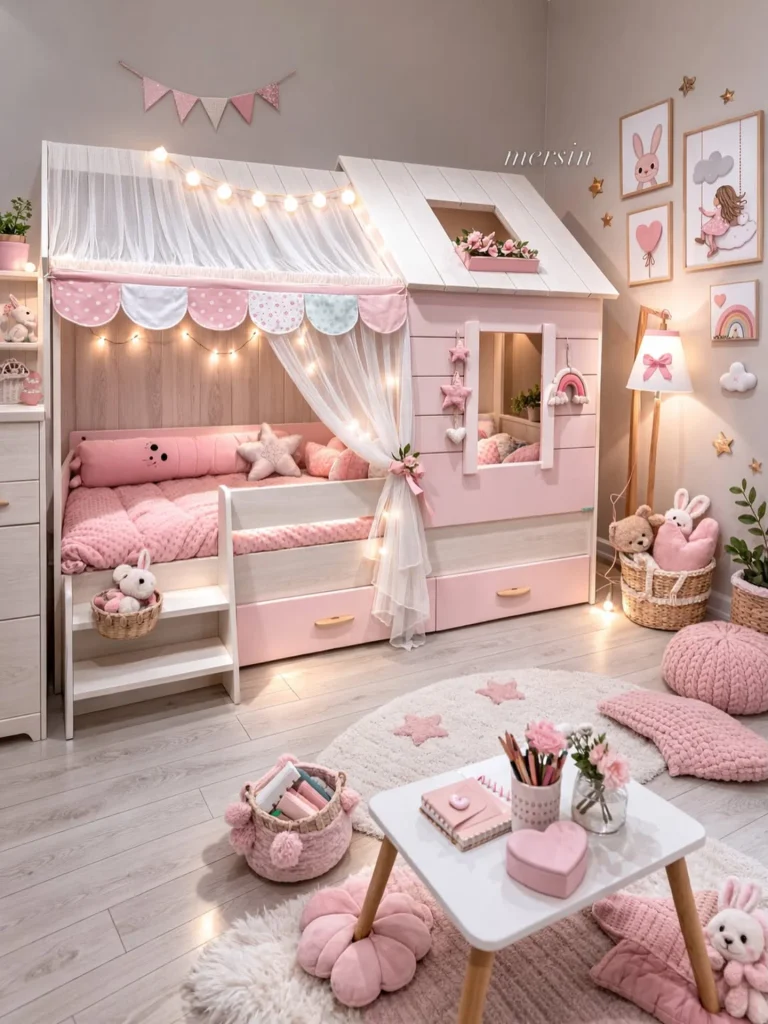
Bean bags and floor cushions provide extra seating without the cost or permanence of a full armchair, making them a practical addition to a room that already has its main furniture pieces in place. Because they’re lightweight and easy to move, this seating adapts easily to whatever activity is happening in the room at a given moment, from reading to hosting friends.
A durable, wipeable outer fabric, rather than a delicate upholstery material, holds up best to the kind of regular, rougher use this type of seating typically gets. This works particularly well for elementary-aged children and up, since younger toddlers may need more supportive seating. Rooms without much extra floor space still suit this option, since bean bags and cushions can be pushed aside or stacked when not in use.
Dresser with Attached Mirror: A Dual-Purpose Getting-Ready Station

A dresser with an attached mirror combines clothing storage with a small grooming or getting-ready area, which becomes increasingly useful as children move from toddler years into the pre-teen stage. The mirror doesn’t need to be large to be functional, and many versions are designed to detach or be added later if a plain dresser is purchased first.
This suits pre-teens and teenagers particularly well, since the getting-ready function becomes more relevant as children start dressing and grooming more independently. A dresser with soft-close drawers, rather than standard runners, is worth the extra cost given how frequently drawers get used and occasionally slammed shut during daily routines. This piece works in nearly any room size, since it replaces a plain dresser rather than adding an entirely new furniture category.
Choosing the Right Materials for Kids’ Bedroom Furniture
Material choice matters more in a kids’ room than in almost any other room in the house, since the furniture needs to withstand daily impact, spills, and climbing in a way adult furniture generally doesn’t.
Solid wood or high-quality plywood, rather than particleboard, is worth prioritizing for larger pieces like beds and dressers, since these items see the most repeated stress over years of use. Non-toxic, low-VOC paints and finishes are particularly important for younger children’s rooms, given how much time is spent in close contact with the furniture during sleep and play. Rounded edges and corners, rather than sharp right angles, reduce the risk of injury during the more physical, high-energy years of early to mid-childhood.
Sizing and proportion carry as much weight as material choice. Furniture scaled appropriately to a child’s current height and age, rather than oversized pieces bought to be “grown into,” tends to get used more comfortably and safely in the meantime. Overloading a smaller room with too many large pieces at once is the most common mistake in this category, since it’s what turns a room meant for play and rest into one that feels cramped and difficult to move around in.