Blonde hair behaves differently at short lengths than it does long. With less hair to soften the shade, every tone decision, from platinum to honey, reads more clearly against the skin, which makes the cut and the color work together more than they would on longer hair.
The real test is not how the cut looks fresh out of the salon chair with a full gloss just applied. A good short blonde hairstyle should still look sharp after a home wash, hold its shape through humidity, and grow out without an awkward, patchy transition between color touch-ups.
This guide explores fifteen practical short blonde hairstyles across platinum, honey, ash and golden tones, for fine, thick, straight, wavy and curly hair. Each one balances shape, color visibility and maintenance differently, so you can pick a cut that fits your hair and your routine.
Classic Pixie in Platinum Blonde

A classic pixie with close-cropped sides and slightly longer length on top is one of the most striking ways to wear platinum blonde. The short length puts the color on full display, since there’s minimal shadowing or root-to-tip variation to soften it.
This cut works best on straight to slightly wavy hair, where the clean lines of a pixie read clearly rather than getting lost in texture.
Because platinum fades toward brassy yellow rather than a muted shade, a purple-toned shampoo used once a week helps keep the color looking cool and fresh between salon visits.
This cut is also one of the quickest to style day to day, since the short length dries fast and typically needs only a small amount of texturizing product worked through with fingers.
Textured Crop in Golden Blonde

A textured crop, with choppy pieces left longer on top and cropped shorter at the sides, suits golden blonde particularly well, since the warm tone reads as rich and sun-kissed even with heavy texturizing.
The choppiness also helps disguise regrowth longer than a sleek, uniform cut would, since golden tones tend to blend more forgivingly with natural brown roots than platinum does.
A matte styling paste worked through dry hair keeps the texture separated and prevents the cut from looking too polished or one-dimensional.
This style also tends to suit a wider range of face shapes than a very close-cropped pixie, since the added length on top gives more flexibility in how the front pieces are styled and directed.
Short Bob in Soft Honey Blonde.
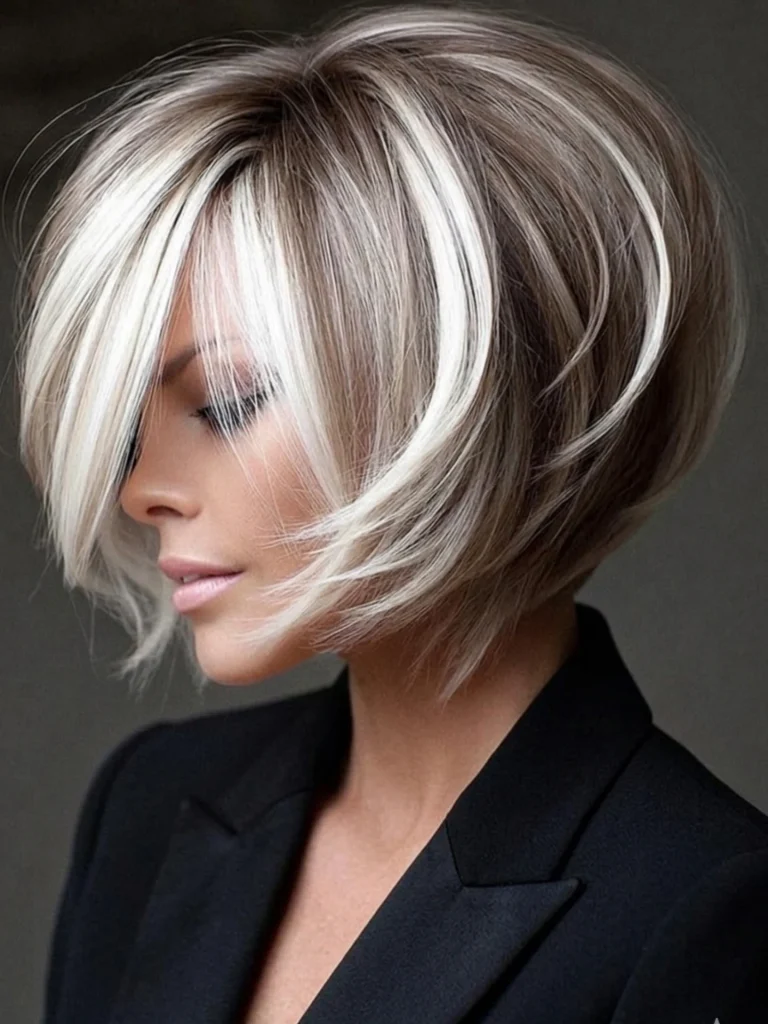
A chin-length bob softens the boldness of blonde hair when paired with a warm honey tone, giving the color an approachable, sun-warmed quality rather than a stark, graphic statement.
This cut suits fine to medium hair well, since the blunt line at the chin adds the appearance of density that finer honey-toned hair sometimes lacks.
A gloss treatment every few weeks helps maintain honey blonde’s warm undertone, since it can fade toward a flatter, duller shade faster than deeper blonde tones.
Because this shade sits closer to a natural tone than most other blondes on this list, it also tends to blend more forgivingly with regrowth, giving a bit more flexibility between color appointments.
Shaggy Pixie With Fringe in Bright Blonde

A shaggy pixie with choppy layers throughout and a full fringe suits the boldest, brightest blonde tones, since the movement and texture keep a vivid color from looking flat or overly solid.
This style works especially well for anyone transitioning from longer hair to a short cut, since the shag’s inherent texture forgives some unevenness during the first few weeks as the cut settles.
Diffusing the hair upside down with a light mousse builds volume at the crown, which balances the visual weight of a full, bright blonde fringe.
This cut also grows out with relatively little fuss, since the shaggy layers already have built-in texture that continues to look intentional as the length between trims increases.
Undercut Bob in Ash Blonde

Pairing a bob with a shaved or closely cropped undercut at the nape adds an edge to blonde hair that a standard bob doesn’t offer, and the cool ash tone suits this bolder shape particularly well.
This cut works on straight to wavy hair, where the top layer can be styled to fall over and disguise the undercut, or swept up and back to show it off intentionally.
Purple-based color-depositing conditioner used occasionally helps keep the ash tone from drifting warmer as it fades.
Because the undercut portion is hidden or shown at will, this style also offers more versatility for formal occasions or workplaces with more conservative dress expectations, without requiring a different haircut altogether.
French Crop in Sandy Blonde

A French crop, short on the sides with a textured fringe left longer on top, gives sandy blonde tones a modern, slightly edgy shape. The cropped sides keep the focus on the color at the crown and fringe.
This style suits thick, straight to wavy hair especially well, since the fringe needs enough density to hold its textured shape without looking sparse.
A small amount of matte clay pushed through the fringe, rather than a shiny pomade, keeps the finish looking natural rather than overly styled.
This cut holds up particularly well in professional settings, since the cropped sides read as neat and low-maintenance even while the fringe and color add personality up top.
Long Pixie With Side-Swept Bangs

A longer pixie, with enough length on top to sweep to one side, softens the boldness of a shorter cut while still keeping the maintenance relatively low. Warm blonde suits this softer shape particularly well.
This cut offers more versatility than a classic pixie, since the extra length allows for a few different styling options depending on the day, from swept to the side to pushed straight back.
A lightweight pomade smoothed through damp hair before blow-drying helps the side-swept section hold its direction throughout the day.
Curly Pixie in Golden Blonde

A curly pixie, cut specifically to account for the shrinkage curls experience, pairs particularly well with warm golden tones, since the color catches light differently across each curl’s curve than it would on straight hair.
This cut should be done dry, since a stylist needs to see exactly how each curl springs up before determining the final length and shape.
A curl-defining cream applied to soaking wet hair, then left to air dry without disturbance, keeps the golden curls defined rather than frizzing into a lighter-looking halo.
Blunt Bob in Bright Blonde

A perfectly blunt bob, cut in one clean line, is one of the most graphic ways to wear a bright, saturated blonde. The sharp line and vivid color together create a strong, confident silhouette.
This cut requires the healthiest possible hair and the most consistent maintenance on this list, since both a blunt line and a vivid color show any unevenness or fading immediately.
A weekly color-depositing mask in a matching blonde tone keeps the color from dulling between full color appointments.
Wolf Cut in Warm Blonde

A wolf cut, combining shaggy layering with a mullet-inspired silhouette, gives short blonde hair a textured, lived-in look that suits warm blonde tones especially well, since the color photographs as rich rather than flat under heavy layering.
This cut works best on thick to medium hair, where there’s enough density to support the layering without looking thin or patchy.
Scrunching a light texturizing spray through damp hair before air-drying enhances the choppy, undone quality the cut is known for.
Side-Parted Bob in Champagne Blonde

A side-parted bob, with the part landing off-center rather than in the middle, adds asymmetry and volume to a classic shape. Soft champagne blonde suits this polished style particularly well, reading as luminous rather than flat.
This cut works especially well on straight hair, where the deep side part and glossy finish depend on a smooth, controlled surface to read clearly.
A flat iron used in small sections, followed by a shine serum, achieves the glossy finish that makes champagne tones look their richest.
Curly Bob in Bright Blonde

A curly bob, cut to sit just above or at the shoulders once the curls spring up, gives bright blonde tones room to show their full range of color across each curl. The bounce and volume of the cut suit a lighter, more luminous shade.
This length works well for medium to thick curl patterns, where there’s enough density to fill out the rounded silhouette a curly bob relies on.
Plopping the hair in a microfiber towel after washing, then applying a curl cream, helps define each curl while locking in moisture that keeps blonde tones from looking dry or dull.
Asymmetrical Crop in Icy Blonde

An asymmetrical crop, with one side cut noticeably shorter than the other, gives short blonde hair a bold, modern edge. Icy blonde suits this dramatic shape particularly well, since the cool tone adds a graphic sharpness to the silhouette.
This style photographs well and works best on straight to slightly wavy hair, where the asymmetry depends on a clean, visible line to read clearly.
A toning treatment every few weeks helps maintain icy blonde’s coolness, since lighter tones can fade toward yellow without regular upkeep.
Feathered Pixie in Soft Beige Blonde
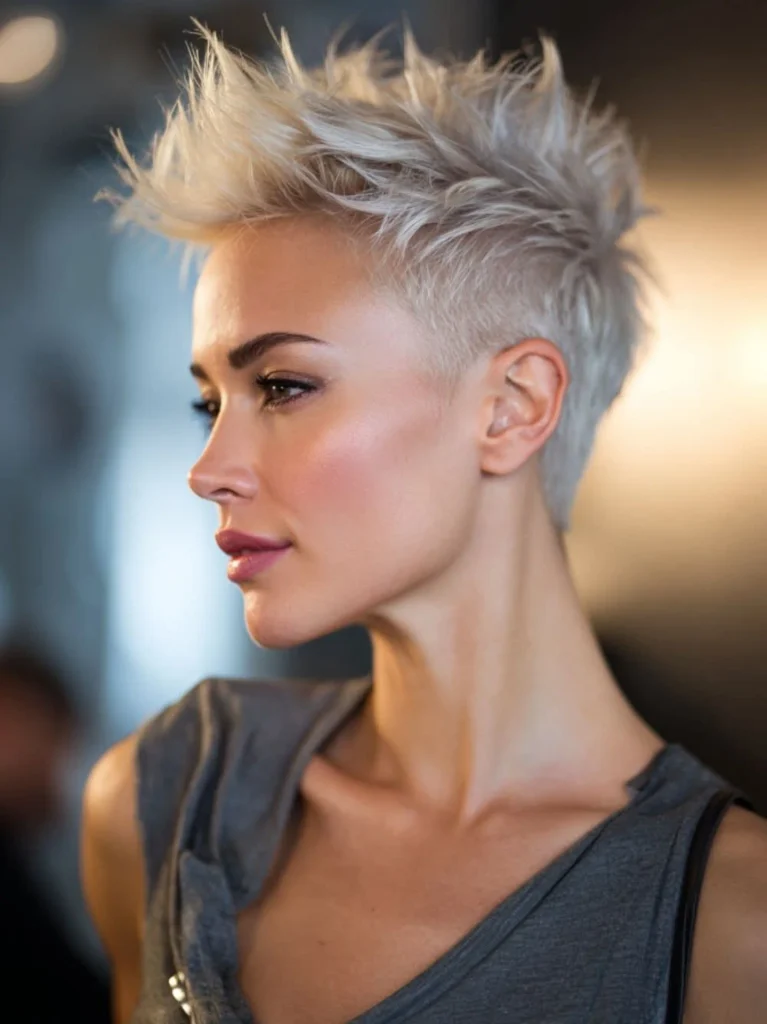
A feathered pixie, with softly blended layers rather than sharp, graphic lines, pairs well with a gentler beige tone, creating an overall soft, approachable look rather than a bold statement.
This cut suits fine to medium hair especially well, since the feathering technique adds the appearance of movement and density without requiring thick hair to begin with.
A light volumizing spray at the roots, combined with a soft round-brush blowout, keeps the feathered layers looking full rather than flat.
Low-Maintenance Crop in Natural Dirty Blonde

For anyone who prefers a natural blonde rather than a heavily lifted or color-treated shade, a simple crop that works with the hair’s own texture and color offers one of the lowest-maintenance options on this list.
This cut requires little more than a trim every six to eight weeks, since there’s no color transition or vivid shade to manage as the hair grows.
A leave-in conditioner and minimal styling product, applied to damp hair before air-drying, is usually enough to keep this style looking polished day to day.
Final Thoughts
The most flattering short blonde hairstyles work with both the tone of blonde you’ve chosen and the texture your hair naturally has. Bright, cool platinum and icy tones tend to suit bolder, more graphic shapes, while warmer honey and golden tones often pair well with softer, more textured cuts.
Think about how much color maintenance you’re willing to commit to, how often you can get a trim to keep a short cut looking sharp, and whether you want the color or the shape to be the main statement. A great short blonde hairstyle should look intentional on an ordinary morning, not only right after a fresh color and cut.
It’s also worth revisiting your shade and shape together every so often, since blonde tones fade and shift more noticeably than most other colors, and a cut that suited a brighter shade a few months ago may need small adjustments once the color has softened.
Frequently Asked Questions
Does Blonde Fade Faster on Short Hair? Blonde fades at a similar rate regardless of length, but it’s more noticeable on short hair since there’s less length to hide uneven fading, and shorter cuts are typically trimmed more often, which can remove color faster than longer hair would.
What Blonde Tone Is Easiest to Maintain? Warmer, more natural tones like honey and golden blonde tend to fade less noticeably than bright platinum or icy shades, since they blend more forgivingly with natural regrowth and show less contrast as roots come in.
Can Short Blonde Hairstyles Work on Curly Hair? Yes, several styles above, including a curly pixie and curly bob, are specifically cut to account for curl shrinkage and work well with blonde tones, which show beautifully across the curve of each curl.
How Often Should a Short Blonde Haircut Be Trimmed? Most short cuts need a trim every four to six weeks to hold their shape, though slightly longer styles like a long pixie can sometimes stretch to eight weeks.
How Do I Keep Blonde Hair From Turning Brassy or Yellow? A purple-toned shampoo used once or twice a week, along with a color-depositing conditioner or mask, helps neutralize brassy tones and slows fading between salon visits.
What Should I Tell My Hairstylist? Let them know whether you want a natural or vivid blonde, how much color maintenance you’re comfortable with, and bring a reference photo showing both the cut and the specific shade of blonde you have in mind.