Quick weaves have earned their name for good reason: unlike traditional sew-in methods that require hours of braiding and tracking, a quick weave bonds extension hair directly onto a wig cap or cornrow base, cutting installation time down significantly while still delivering a full, salon-finished look.
This method has become especially popular for anyone wanting versatility without a lengthy appointment, since the hair can be cut, styled and colored almost immediately after install, and the natural hair underneath stays protected and braided down throughout the entire wear period.
The range of looks achievable with a quick weave is also part of its appeal, since the technique accommodates everything from a simple everyday bob to a dramatically long, voluminous style, all using the same basic installation method as a foundation.
This guide covers fifteen quick weave hairstyles, from everyday straight looks to more detailed styling options, along with tips for keeping each one looking fresh and well-maintained.
Because the extension hair is bonded rather than individually sewn, proper application and removal technique matters significantly for protecting the natural hair underneath, so working with an experienced stylist is worth the investment for this method specifically.
The Classic Straight Bob

A classic straight bob remains one of the most requested quick weave styles, offering a polished, low-maintenance length that works for nearly any setting from the office to everyday errands.
This style suits most face shapes, and the shorter length means less extension hair is needed overall, which can make this one of the more affordable quick weave options.
A flat iron used on low heat after installation smooths any texture from the bonding process, giving the bob its signature sleek, uniform finish.
This style remains a dependable go-to specifically because it requires minimal daily styling once installed, needing only an occasional touch-up with a flat iron.
Choosing a slightly blunt edge versus a softer, rounded perimeter is worth discussing with your stylist beforehand, since that small detail changes how formal or relaxed the finished bob ultimately reads.
Long Layered Waves

Long layered waves bring significant length and movement, using a quick weave base to achieve a dramatic change that would take natural hair years to grow.
This style works particularly well for special occasions or anyone wanting a significant length change without the long-term commitment of permanent extensions.
A curling wand used in alternating directions throughout the length creates natural-looking waves that photograph beautifully in both daylight and flash.
This style has remained popular specifically because the added length and volume deliver such a dramatic, glamorous transformation from a single installation.
Sleeping with hair loosely braided or wrapped afterward helps preserve the wave pattern overnight, cutting down on the amount of re-styling needed the following morning.
The Side-Part Sleek Install

A deep side part paired with completely smooth, straight styling creates an editorial, polished look that reads as considerably more sophisticated than a centered part.
This style works on most quick weave lengths, and the deep part alone changes the overall silhouette and face-framing effect significantly.
Using a fine-tooth comb to establish and maintain the deep part, combined with a lightweight shine serum, keeps this style looking crisp throughout its wear.
This polished styling choice works particularly well for professional settings, where the clean, deliberate part reads as put-together and intentional.
Switching the part to the opposite side every so often also helps prevent the scalp along the parting line from feeling overly stressed by consistent tension in one spot.
Bouncy Voluminous Curls

Setting the entire installed length in large-barrel curls creates a voluminous, glamorous finish that showcases the fullness a quick weave can achieve.
This style works particularly well for events, photoshoots or any occasion calling for a noticeably more dramatic, styled look than an everyday straight finish.
Using a large-barrel curling iron and curling away from the face in alternating sections produces the bouncy, full-body curl pattern this style depends on.
This voluminous style has remained a favorite for celebrations specifically because the added fullness from the extensions makes the curls read as especially lush and photogenic.
Applying a light-hold curl spray immediately after setting each section helps the curl pattern hold through several hours of dancing, photos or general movement at an event.
The Blunt Cut Lob

A blunt-cut lob, landing somewhere between the chin and shoulders with a sharp, unlayered edge, offers a graphic, modern alternative to a softer, more layered length.
This style suits most quality quick weave textures, and the precise line depends on smooth, straight styling to read clearly and intentionally.
Requesting the stylist cut the length after full installation, rather than before, ensures the blunt line falls exactly where intended once the hair settles.
This clean, structured cut has become increasingly popular specifically for how deliberate and fashion-forward it reads compared to softer, rounded length options.
Pairing the blunt lob with a glossing treatment on the extension hair itself keeps the strands reflecting light evenly, which makes the sharp cut line look even more intentional.
Quick Weave With Curly Textured Hair

Choosing extension hair textured to match or complement your natural curl pattern creates a quick weave that blends seamlessly rather than reading as an obviously different texture.
This style works particularly well for anyone wanting the protective benefits and styling flexibility of a quick weave without a dramatic textural change from their natural hair.
Working with a stylist who can properly blend the extension texture at the hairline specifically is essential for this style to look seamlessly natural.
This blended approach has grown in popularity specifically because it offers protective styling benefits while still looking authentically like the wearer’s own hair pattern.
Bringing a sample of your own hair’s texture to the appointment, or discussing it in detail beforehand, helps your stylist source extension hair that blends as closely as possible.
The High Ponytail Install

A quick weave installed with the eventual ponytail styling in mind allows for a dramatically long, full ponytail that would be difficult to achieve with natural hair alone.
This style works particularly well for events or photos, where the length and fullness of a quick weave-based ponytail creates a genuinely striking silhouette.
Using a strong-hold gel to smooth the base before gathering the ponytail, then wrapping a section around the elastic, gives this style its signature polished, seamless finish.
This dramatic styling option has become especially popular for red carpet-inspired looks, since it delivers maximum length and volume in a single secured style.
Adding a small hairpiece or ponytail extension that matches the installed hair exactly can boost the length and fullness of this style even further for an especially dramatic finish.
Soft Curtain Bangs With Length

Adding soft, curtain-style bangs to a quick weave installation brings a face-framing, softening element to an otherwise simple long, straight or wavy style.
This style suits most face shapes, and the curtain fringe’s center part and sweeping shape tends to be universally flattering regardless of face structure.
A round brush used while blow-drying the fringe section trains it to curve away from the face, maintaining the soft, swept shape throughout wear.
This face-framing addition has remained popular specifically because it softens a quick weave’s sometimes uniform length with a bit of textural variety up front.
The Wet-Look Finish

Using a strong-hold gel to create a deliberate, glossy wet-look finish throughout the installed hair offers a bold, editorial styling choice that stands apart from a standard dry, smooth finish.
This style works particularly well on shorter to medium quick weave lengths, where the wet-look texture reads as intentional rather than simply unstyled.
Applying the gel in sections with a fine-tooth comb, then allowing the hair to air dry fully, prevents the glossy finish from looking patchy or uneven.
This bold, striking finish has become a distinctive choice for anyone wanting their quick weave to make a confident, fashion-forward statement.
Quick Weave Pixie Cut

A pixie cut installed via quick weave allows anyone with naturally longer or thicker hair to experience a dramatically short style without any actual cutting of their own natural hair underneath.
This style works well for anyone wanting to test out a shorter length commitment-free, since removing the quick weave fully restores access to unaltered natural length.
Working with a stylist experienced specifically in cutting quick weave installations ensures the pixie shape is cut cleanly and evenly across the bonded extension hair.
This low-commitment approach to trying a dramatic cut has become particularly popular among anyone curious about shorter styles without the risk of actually cutting their natural hair.
The Half-Up Glam Style
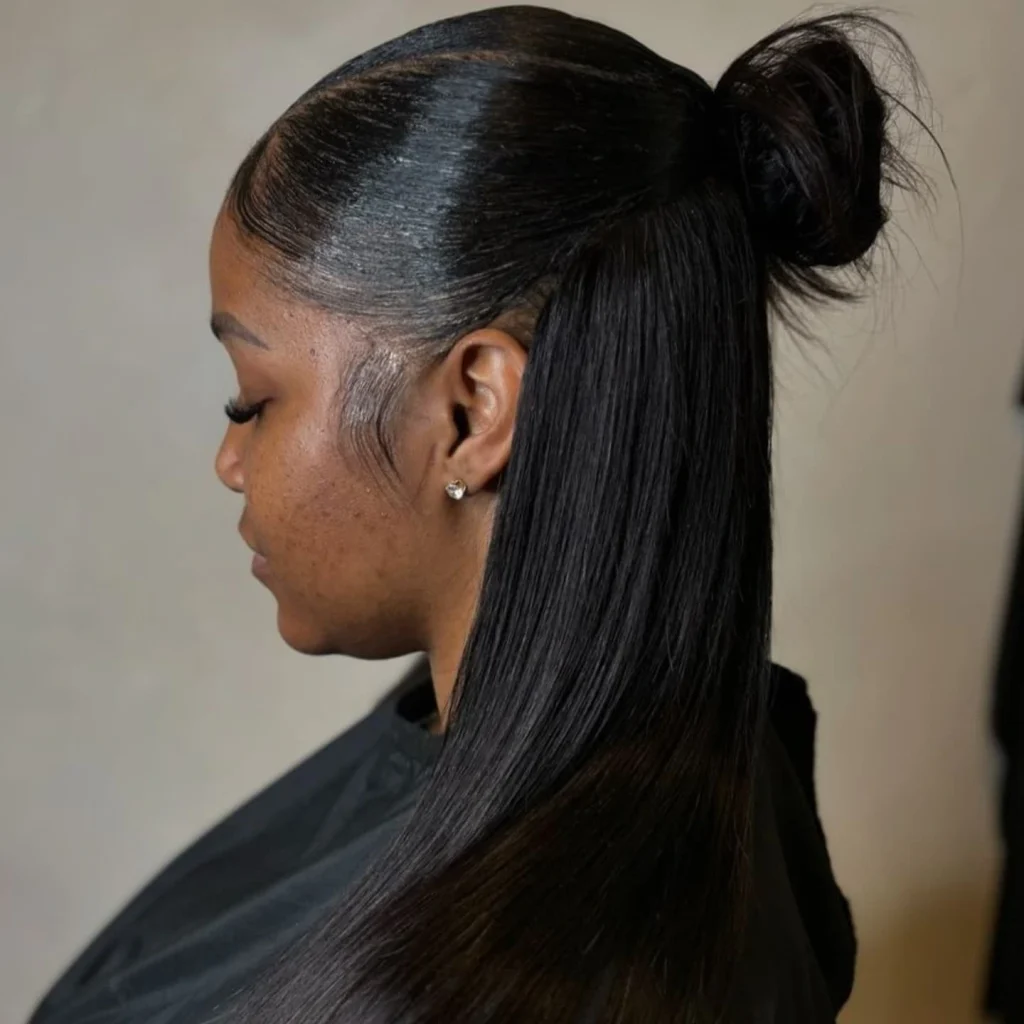
Gathering the top section of a quick weave installation while curling and leaving the remaining length down creates a glamorous, special-occasion-ready style using the extension’s added length and volume.
This style works particularly well for events, since the combination of secured styling and loose, curled length photographs beautifully from multiple angles.
A curling iron used on the hair left down, combined with a decorative pin or clip securing the gathered top section, completes this style’s polished, dressed-up finish.
This elevated style has remained a go-to specifically for weddings, parties and other occasions calling for something more elaborate than an everyday finish.
Natural-Looking Blowout Style

A classic blowout technique, emphasizing root volume and a smooth, bouncy finish throughout the length, gives a quick weave a natural, salon-fresh appearance.
This style works on most quick weave textures and lengths, and the emphasis on volume prevents the installed hair from looking flat or overly uniform.
Drying the roots first while lifting with a round brush, then smoothing the remaining length, achieves this style’s signature full, bouncy finish.
This classic technique remains one of the most dependable options specifically for making a quick weave installation look like healthy, naturally voluminous hair.
The Textured Updo

A loosely gathered updo, styled with deliberate texture rather than tight control, takes advantage of a quick weave’s length and fullness for an elevated, special-occasion look.
This style suits longer quick weave installations particularly well, where there’s enough length and volume to create genuine height and dimension in the finished updo.
Backcombing gently at the crown before gathering the rest of the hair adds the volume this style depends on for its full, glamorous finished shape.
This dressier updo option makes the most of a quick weave’s typical fullness, delivering a more dramatic finished silhouette than natural hair alone might easily achieve.
Color-Blocked Quick Weave

Using extension hair in two or more distinct colors, whether a subtle dimensional blend or a bold, contrasting block of color, creates a striking visual effect that would be more damaging to achieve through chemical processing on natural hair.
This style works particularly well for anyone wanting to experiment with bold color without any chemical risk to their natural hair underneath.
Choosing pre-colored, high-quality extension hair rather than attempting to color the installation afterward helps avoid uneven processing or unexpected color results.
This creative, low-risk approach to experimenting with color has become increasingly popular specifically because it carries none of the damage risk permanent coloring poses to natural hair.
The Sleek Low Ponytail

A sleek, low ponytail takes advantage of a quick weave’s length and fullness while keeping the overall styling controlled, polished and appropriate for professional or formal settings.
This style works particularly well on straighter quick weave textures, since the fully smooth base depends on minimal texture to achieve its clean finish.
Wrapping a thin section of hair around the base of the ponytail conceals the elastic, giving this style a more finished, deliberate appearance.
This polished, versatile style transitions easily between professional daytime settings and slightly dressier evening occasions with minimal adjustment.
Final Thoughts
Across nearly all of these styles, a quick weave’s biggest advantage is genuine versatility, the ability to go from a sleek, polished bob to voluminous curls to a dramatic color change, all without any chemical processing or significant time investment on natural hair underneath.
Protecting the natural hair during both installation and removal matters just as much as the finished style itself, so working with a stylist experienced specifically in quick weave technique helps ensure the hair underneath stays healthy throughout the wear period.
Trying a new style each time you reinstall is also a low-effort way to keep this versatile protective method feeling fresh rather than defaulting to the same look every single time.
Frequently Asked Questions
How Long Does a Quick Weave Typically Last? Most quick weaves last two to four weeks, though this varies depending on how well the bond holds up and how the natural hair underneath is cared for during wear.
Is a Quick Weave Damaging to Natural Hair? When installed and removed properly by an experienced stylist, a quick weave is generally considered a lower-risk protective style, though improper bonding or aggressive removal can cause damage.
Can I Wash My Hair While Wearing a Quick Weave? Yes, though it typically requires more careful technique than washing natural hair alone, focusing water and product primarily on the scalp and cornrow base rather than soaking the bonded sections.
How Is a Quick Weave Different From a Traditional Sew-In? A quick weave bonds extension hair directly onto a wig cap or braided base using adhesive, while a traditional sew-in involves hand-sewing wefts onto cornrows, a process that typically takes considerably longer.
Can I Color a Quick Weave After It’s Installed? It’s generally safer to choose pre-colored extension hair rather than coloring after installation, since processing chemicals can affect the bond and the extension hair may not react predictably.
Is a Quick Weave a Good Option for Natural Hair Growth? Many people choose quick weaves specifically as a protective style that allows natural hair to grow with minimal daily manipulation, provided the installation and removal are both done carefully.