Long face shapes are typically longer than they are wide, with a straight cheek line and a chin that can look narrow or elongated. The right haircut can visually shorten the face, add width around the cheeks, and balance out the vertical length instead of stretching it further.
The real test is not how the haircut looks for ten minutes in a salon chair. A flattering style for a long face should add horizontal movement, stay manageable after a home wash, and still feel natural with your everyday routine.
This guide explores fifteen practical hairstyles for long faces, covering fine, thick, straight, wavy and curly hair. Each one focuses on shortening the visual length of the face while keeping the style easy to live with, so you can choose a cut that suits both your features and your routine.
Soft Waves With Side-Swept Bangs.

Side-swept bangs are one of the simplest ways to interrupt the length of the forehead. When paired with soft waves that fall around the cheeks, they add width exactly where a long face needs it most.
The bangs should be cut on an angle rather than straight across, so they blend naturally into the rest of the hair. This avoids a harsh line and keeps the style easy to grow out later.
For styling, waves can be set with a curling iron or wand pointed away from the face, then brushed out gently with fingers for a looser, fuller finish.
This combination also adapts well across seasons. In humid weather, a light anti-frizz serum keeps the waves from tightening up too much, while in drier months a small amount of oil on the ends prevents the bangs from looking flat against the forehead.
Blunt Bob at the Chin

A blunt bob that ends right at the chin is one of the most reliable cuts for a long face. The solid, straight-across line creates a strong horizontal shape that visually shortens the face and adds fullness along the jaw.
This cut works especially well on straight or slightly wavy hair, where the clean line stays visible throughout the day. Curly hair can also wear this shape, though the ends should be cut slightly longer to account for shrinkage.
Keeping the part centered or just off-center helps distribute width evenly rather than pulling the eye downward.
Because the line of a blunt bob is so visible, healthy ends matter more here than in most other cuts. Regular trims every six to eight weeks keep the edge crisp and prevent split ends from softening the shape in a way that undoes the widening effect.
Full Fringe With Long Layers
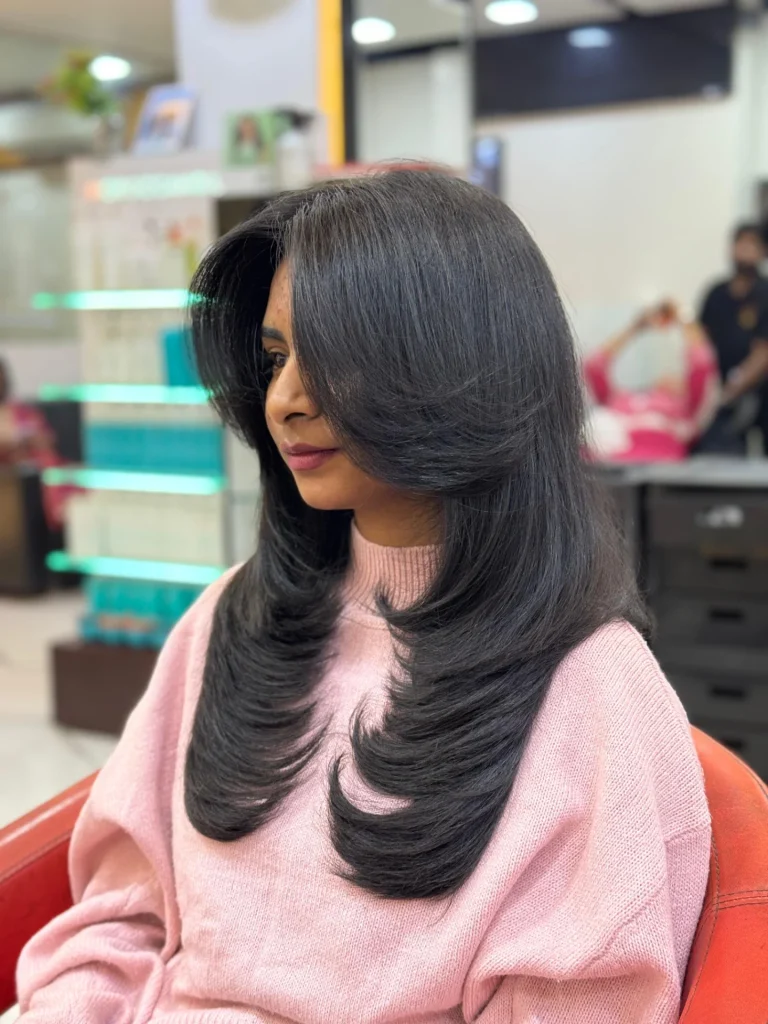
A full, blunt fringe across the forehead is one of the most direct ways to shorten a long face. Paired with long layers through the rest of the hair, it keeps the overall style balanced instead of top-heavy.
The fringe should sit just above the brows, with the length adjusted so it does not look disconnected from the face-framing layers. A soft, slightly rounded edge is more forgiving than a completely straight one.
Regular trims are important here, since even a small amount of growth can push the fringe into the eyes and change how it frames the face.
This style also gives you flexibility day to day. On days you want a change, the fringe can be pinned back or swept to the side, letting you switch between a fuller framed look and a more open one without touching the rest of the haircut.
Voluminous Curls at Shoulder Length

Curls that sit around shoulder length and are encouraged to expand outward add width exactly at the point where a long face benefits most. The curl pattern naturally creates fullness at the sides rather than pulling everything downward.
This style works best when layers are added throughout so the curls can bounce and spread rather than hanging in one heavy column. Diffusing the hair upside down can help build extra volume at the roots and sides.
A lightweight curl cream applied to damp hair helps define the curls without weighing them down.
Sleeping on a silk or satin pillowcase can also help preserve the curl pattern overnight, reducing the need for heavy restyling the next morning and keeping the width at the sides consistent from day to day.
Lob With Face-Framing Waves.

A long bob, or lob, that hits between the chin and shoulders gives enough length to style with waves that curve inward near the jaw. This inward curve softens the length of the face and adds subtle width along the lower half.
The ends should be cut with slightly rounded layers rather than a completely blunt line, which makes it easier to achieve the inward curl with minimal heat.
Waves can be set overnight with soft rollers for a natural finish that requires little morning styling.
This length is also forgiving if you’re transitioning from longer hair, since it still allows for a low ponytail or half-up style on days when you want the waves pulled back without losing the width they add around the jaw.
Middle Part With Wide Layers

A middle part paired with wide, sweeping layers is a low-maintenance way to add horizontal balance to a long face. The part itself creates symmetry, while the layers fan outward instead of falling flat against the sides.
This style suits fine to medium hair particularly well, since the layers create the appearance of extra volume without needing thick strands to begin with.
Blow-drying with a round brush, directing the ends outward rather than under, reinforces the widening effect through the day.
This is one of the easiest styles to maintain between salon visits, since the middle part rarely needs adjusting and the layers continue to look intentional even as the hair grows out.
Textured Pixie With Side Fringe.

For those open to shorter hair, a textured pixie with extra length left at the front can still shorten a long face effectively. The side-swept fringe covers part of the forehead, while textured pieces at the crown reduce vertical emphasis.
This cut works well on straight or wavy hair and can be softened further with a light styling wax worked through the ends to break up any straight lines.
Because pixie cuts grow out quickly, regular trims every four to six weeks help keep the proportions balanced.
Despite the short length, this cut is far from limiting. Adding texture with a matte wax at the roots and crown keeps the shape from looking too sleek, which helps preserve the illusion of width even as the hair moves throughout the day.
Wavy Lob With Curtain Bangs

Curtain bangs split in the center and blend into loose waves offer a softer alternative to a full fringe. They open up the center of the face while still interrupting the length of the forehead.
This combination works particularly well with a lob length, since the waves have enough room to move without becoming too heavy at the ends.
A texturizing spray on dry hair can help hold the wave pattern and keep the bangs from falling too flat against the skin.
Because curtain bangs are cut with more length than a full fringe, they are also easier to grow out or adjust later, making this a good middle-ground choice for anyone unsure about committing to bangs long-term.
Thick, Blunt Layers With Volume at the Crown

Thick hair can be shaped into blunt, solid layers that stop around the shoulders, with extra volume built up at the crown through cutting rather than styling alone. This shifts visual weight upward and outward instead of letting it fall straight down the length of the face.
Layers should be kept minimal through the mid-lengths so the ends stay full and heavy, reinforcing the horizontal line at the bottom of the cut.
A root-lifting spray applied before blow-drying can enhance the built-in volume without extra effort.
Low-Maintenance Waves With Rounded Ends

Not every long-face-friendly cut needs bangs or heavy layering. Simply rounding off the ends of long hair and adding a loose, natural wave can soften the overall silhouette without a dramatic change.
This style suits anyone who prefers longer hair and wants a subtle adjustment rather than a full restyle. The rounded ends prevent the hair from tapering into a point, which can otherwise draw the eye further down the face.
Air-drying with a light sea salt spray gives the waves a relaxed, undone texture that still supports the widening effect.
Shaggy Layers With Heavy Fringe

A shag with a heavy, textured fringe combines two of the most effective tools for a long face: a strong horizontal line at the forehead and choppy layers that break up length everywhere else. The overall effect is fuller and less streamlined than a classic layered cut.
The layers should be cut unevenly on purpose, with shorter pieces around the face and slightly longer ones toward the back, so the shape has movement in every direction rather than falling straight down.
A texturizing paste worked through dry ends helps keep the choppy layers separated and prevents the style from looking too smooth or flat.
Chin-Length Bob With Rounded Fringe.

Combining a chin-length bob with a rounded fringe doubles down on horizontal shape, making it one of the more dramatic options for shortening a long face. The fringe curves gently rather than cutting straight across, which keeps the overall look softer.
This pairing works best on straight to slightly wavy hair, where both the bob and the fringe hold their shape without much daily effort.
A small amount of smoothing serum on the fringe helps prevent flyaways while keeping the rounded shape intact.
Half-Up Style With Front Volume

A half-up style is not a haircut on its own, but it is a practical way to add width to a long face using length you already have. Teasing the crown slightly and pulling small sections forward at the temples widens the upper half of the face.
This works well for special occasions or busy mornings when a full restyle is not practical, and it suits almost any hair length past the shoulders.
Securing the half-up section loosely, rather than pulling it tight, keeps the added volume looking natural instead of stiff.
Wolf Cut With Face-Framing Pieces

The wolf cut combines shaggy, heavily layered hair with face-framing pieces that start high near the cheekbones. The heavy layering throughout adds volume at multiple points along the length, which counters the narrowing effect a long face can have.
This cut suits thick to medium hair especially well, since the layering needs enough density to create visible separation rather than looking thin.
Scrunching a light mousse through damp hair and diffusing helps the layers separate and adds the tousled texture the cut is known for.
Long Layers With a Deep Side Part

A deep side part shifts more hair to one side of the face, creating asymmetry that breaks up the straight vertical lines a long face can have. Paired with long, cascading layers, it adds fullness near the roots on the heavier side.
This style requires minimal cutting and can often be achieved simply by changing how existing long hair is parted and layered slightly around the face.
Directing the roots in the opposite direction while blow-drying, then combing them into the deep part, helps maximize the lift and width at the crown.
Final Thoughts
The most flattering hairstyles for long faces work by adding width and interrupting vertical length, whether through bangs, waves, curls, or a strong horizontal line at the ends. Fine hair may rely more on layering and styling tricks for volume, while thick or curly hair can often create width naturally through cut alone.
Think about how much fringe or bang maintenance you’re comfortable with, how your hair behaves after a wash, and how often you can realistically visit the salon. A good haircut should look balanced on an ordinary day, not only right after professional styling.
It also helps to consider your daily routine before committing to any of these cuts. Someone who air-dries most mornings will get more consistent results from a style built around natural texture, while someone who regularly uses hot tools has more room to experiment with sleeker, more structured shapes like a blunt bob or a chin-length fringe pairing.
Frequently Asked Questions
Do Bangs Always Suit a Long Face? Not always, but most long faces benefit from some kind of fringe, whether full, side-swept, or curtain style, since it shortens the visible length of the forehead.
Is Short Hair a Good Option for Long Faces? Yes, as long as some length or texture is left at the front. A pixie with a side fringe or textured crown can work just as well as longer styles.
How Do Layers Help a Long Face? Layers that flare outward rather than falling straight down add width at the sides, which balances the overall length of the face.
Can These Styles Work Without Heat Styling? Yes, many of these cuts are designed to rely on natural texture, using lightweight products to enhance waves or curls instead of daily heat styling.
Is a Half-Up Style Really a Long-Term Option? It works well as an occasional styling trick rather than a permanent solution, but it is a useful way to add width on days when you don’t want to change your haircut.
What Should I Tell My Hairstylist? Mention that you have a long face shape and want a cut that adds width rather than length. Bring a reference photo and be clear about how much fringe or layering you’re comfortable maintaining.